How Much Is Auto Insurance in Massachusetts? Your Guide to Understanding Costs and Coverage

Imagine cruising down the stunning roads of Massachusetts without a worry in the world, knowing that you and your vehicle are protected by a robust auto insurance policy. But have you ever wondered, just how much does this peace of mind actually cost in Massachusetts? Welcome to a journey where we unravel the mystery behind auto insurance rates in the Bay State, offering you insights that can transform your driving experience.
Whether you’re a seasoned driver or new to the highways, understanding auto insurance in Massachusetts is not just about meeting legal requirements—it’s about securing peace of mind and financial safety. Join us as we dive into the essentials of auto insurance, exploring factors that influence rates, deeply examining coverage options, and sharing tips on how to get the most value from your policy. Knowledge is power, and we’re here to put that power in your hands.






Overview of Auto Insurance in Massachusetts
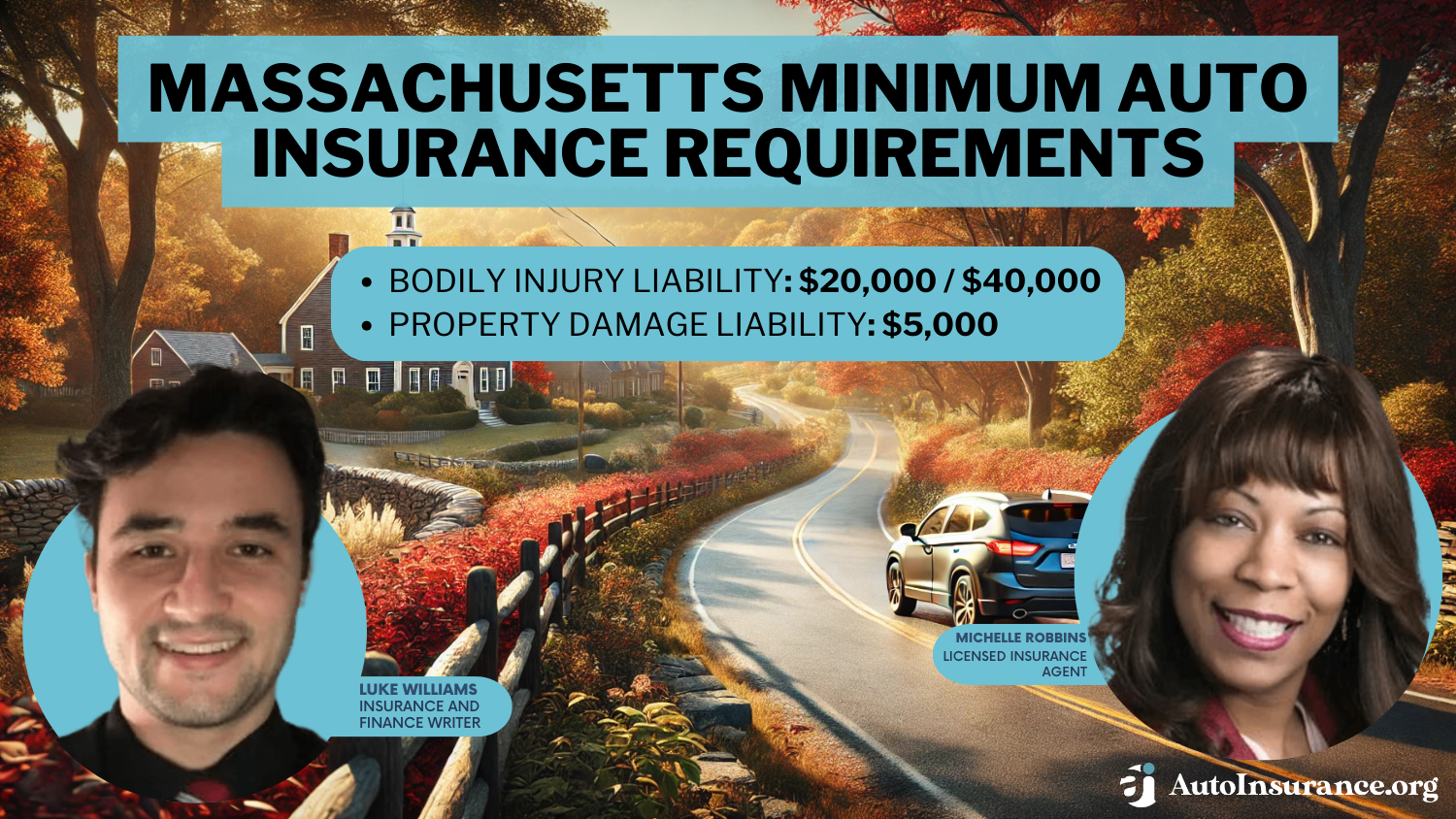
Navigating the world of auto insurance in Massachusetts can be a journey, but understanding the essentials makes it easier. Let’s embark on this informative ride together to uncover what makes Massachusetts unique when it comes to auto coverage.
Massachusetts mandates that drivers carry auto insurance, not just for their protection but to ensure every driver on the road contributes to a safer driving environment. By staying informed about the requirements, you can drive with confidence knowing you’re abiding by state laws and protecting your assets.
Understanding Mandatory Coverage Types
The state of Massachusetts requires certain types of auto insurance coverage by law. These include:
- Bodily Injury Liability: Covers costs associated with injuries to others if you’re at fault.
- Personal Injury Protection (PIP): Provides coverage for medical expenses and lost wages, regardless of fault.
- Property Damage Liability: Handles damages you cause to someone else’s property.
- Uninsured/Underinsured Motorist Coverage: Protects you if you’re in an accident with a driver who lacks adequate insurance.
“Understanding these coverages is essential as they form the backbone of auto insurance in the Bay State.”
The Role of the Insurance Regulatory Body
The Massachusetts Division of Insurance (DOI) oversees the insurance industry, ensuring that policies meet state standards and consumers’ interests are safeguarded. This regulatory body’s responsibilities include:
- Establishing insurance regulations and guidelines.
- Monitoring the financial health and practices of insurance companies.
- Providing resources and support for consumer concerns and complaints.
With the DOI standing firm behind the insurance scene, Massachusetts drivers can rest assured that they’re being looked out for by a vigilant watchdog dedicated to fairness and compliance.
Factors Influencing Auto Insurance Rates
The landscape of auto insurance in Massachusetts is a complex equation of multiple factors. Understanding these elements can help you unravel the specifics that dictate how much you’d pay for coverage in the Bay State.
While some influences are personal, such as your driving record or credit history, others are demographic or vehicle-related. Familiarize yourself with these factors to take better control over how much you fork out for car insurance each month.
Key Elements Affecting Insurance Premiums in Massachusetts
Several key elements exert a significant influence on your auto insurance rates in Massachusetts, each playing its role like performers in a symphony:
- Driver’s Age and Experience: Younger drivers typically face higher premiums due to perceived risk.
- Location: Urban areas such as Boston may result in higher premiums due to increased risk of accidents and theft.
- Driving Record: A clean slate could earn you better rates, while violations translate to steeper costs.
- Vehicle Type: Luxurious or high-performance vehicles usually command higher insurance rates.
- Coverage Level: Basic liability may keep costs down, yet comprehensive coverage ensures peace of mind.
Sample Insurance Rates Comparison
To provide clarity, let’s consider a table comparison which artikels potential insurance costs influenced by diverse factors such as demographics, car type, and coverage choices:
| Demographic | Car Type | Coverage Level | Estimated Annual Premium |
|---|---|---|---|
| Young Adult | Sedan | Minimum Coverage | $1,500 |
| Middle-aged Driver | SUV | Full Coverage | $1,200 |
| Senior | Electric Vehicle | Comprehensive | $1,000 |
Discounts and Their Impact on Premiums
Take advantage of insurance discounts that can significantly alleviate your financial load. Companies offer various breaks, allowing you to tailor your budget smartly:
- Bundling Home and Auto Policies: Streamline your expenses and enjoy up to 25% off.
- Safe Driver Discounts: Maintain a flawless driving record to save substantially.
- Good Student Discounts: If academia is your forte, students with high grades can secure discounts around 10%.
- Anti-theft Device Discounts: Protect your car with security devices and benefit from lowered premiums.
“Maximize your savings by stacking multiple discounts to shell out less while obtaining essential coverage.”
Types of Auto Insurance Coverage Available
Navigating the world of auto insurance in Massachusetts might seem like a daunting task, but understanding your options can make all the difference in securing peace of mind on the road. Let’s explore the various coverage types that cater to the unique needs of every driver.
Choosing the right auto insurance coverage is akin to customizing a safety net beneath you as you traverse the highways and byways. Each type of coverage can act as a different strand in that net, ensuring you’re well-protected against the unexpected.
Understanding Liability Insurance
The cornerstone of any auto insurance policy, liability insurance, is designed to protect you from the financial consequences of accidents you cause. It covers the costs associated with injuries and property damage to others.
- What It Covers: Bodily injury and property damage to others.
- When Is It Beneficial: Crucial in any accident scenario where you’re at fault, ensuring victims are compensated.
- Mandatory Requirement: This is a legal requirement in Massachusetts, making it a non-negotiable part of your policy.
Collision Coverage: Shielding Your Investment
Collision coverage steps in to alleviate the financial burden when your vehicle is damaged in a collision, regardless of who’s at fault. It’s particularly valuable for protecting the worth of your automobile.
- What It Covers: Repairs or replacement of your vehicle after an accident.
- When Is It Beneficial: Ideal if you have a newer model; it helps manage repair costs post-collision.
- Optional for: Many, but highly suggested for car owners with high-value or financed vehicles.
Comprehensive Coverage: Beyond the Basics
Comprehensive coverage extends your protection against non-collision-related incidents such as theft, natural disasters, and vandalism. Think of it as an umbrella that shields against the unpredictable elements of life.
- What It Covers: Non-collision events: theft, vandalism, fire, natural disasters.
- When Is It Beneficial: Crucial coverage if you reside in areas prone to extreme weather or heightened crime rates.
- Peace of Mind: Ensures you are prepared for unforeseen events beyond your control — a true safeguard for the cautious driver.
By understanding these key coverage options, Massachusetts drivers can tailor their auto insurance packages to meet personal needs, ensuring they’re comprehensively covered in any scenario that might arise.
Understanding the Cost of Auto Insurance
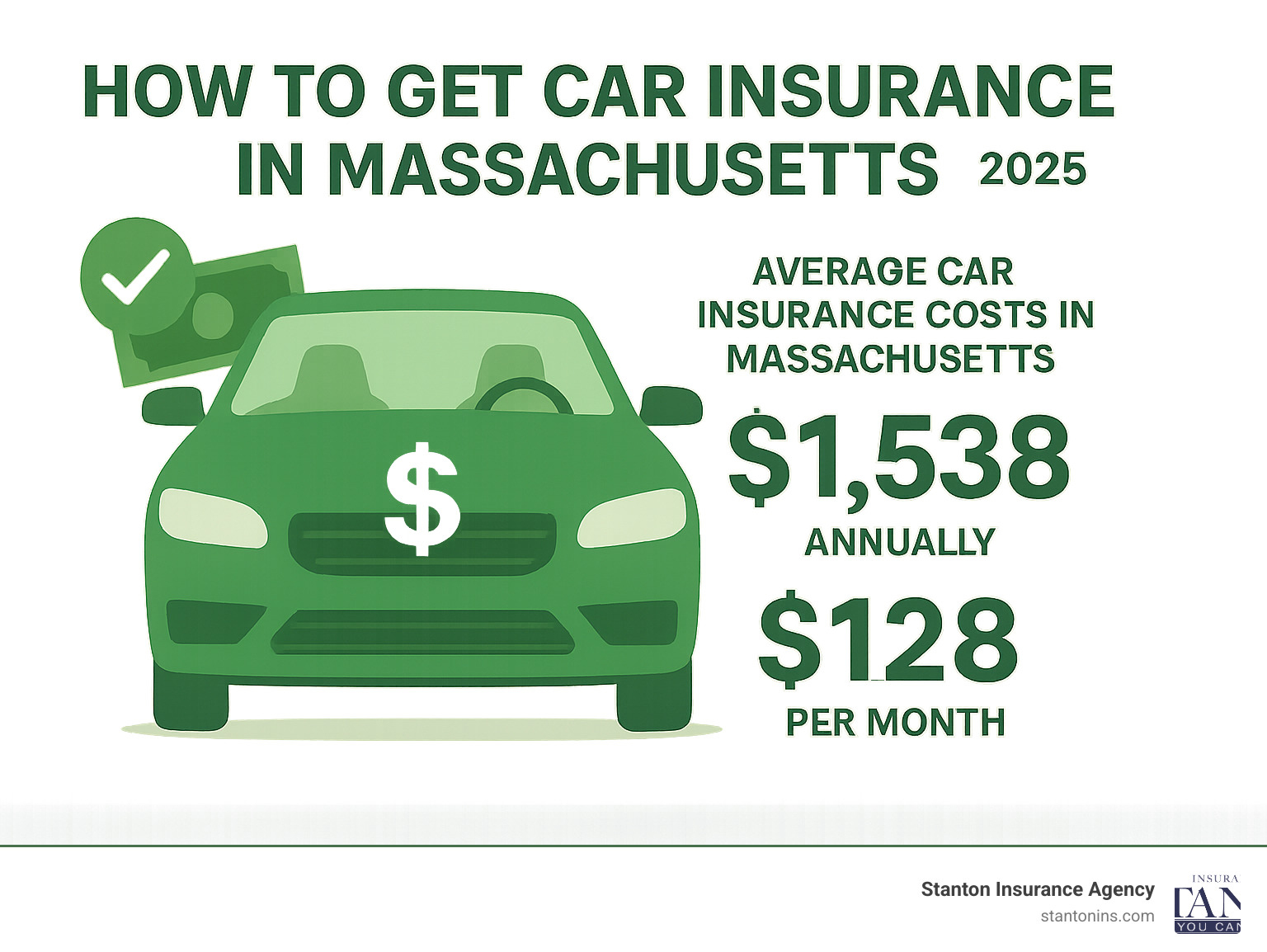
Auto insurance premiums in Massachusetts can often feel like a complex puzzle. By unraveling the different pieces, you can grasp how these costs come together.
Every driver’s premium is unique, much like a piece of art tailored to its owner. Let’s explore the intricate details that shape these figures.
Calculating Auto Insurance Premiums
To illustrate how insurance premiums are determined, consider the details of a hypothetical driver, Jane. Jane lives in Worcester, Massachusetts, drives a mid-sized sedan, and has a clean driving record. Her insurance costs are calculated based on multiple elements: vehicle type, driving history, location, and coverage level. For instance, Jane’s choice of a mid-sized sedan typically results in lower premiums due to enhanced safety features compared to sportscars.
These elements are like brushstrokes on a canvas, creating a detailed and personalized portrait of risk assessment, which becomes Jane’s insurance premium. Insurance companies craft these rates by analyzing big data and local stats, making each decision highly informed.
Geographic Location’s Influence
One might think that where you live is just an address, but in Massachusetts, it’s a pivotal factor in your insurance pricing. Living closer to bustling city centers like Boston can increase premiums due to higher risks of theft and accidents. In contrast, residing in a peaceful suburb like Amherst might see lower premiums, thanks to reduced traffic and vandalism risks.
This variance is akin to the rhythm of a city’s heartbeat, affecting the financial pulse of your car insurance. Your ZIP code is more than a simple number; it’s a dynamic landscape of risk assessments.
Payment Structures and Options
Flexibility is at the heart of insurance payment structures. Policyholders can typically choose between paying fully upfront or breaking the total into smaller, more manageable chunks throughout the year.
- Annual Payment: Pay for the entire year in one swoop, potentially unlocking discounts.
- Quarterly Payment: Spread the cost into four even installments, easing the financial load.
- Monthly Payment: Offers the most manageable option for tight budgets, albeit sometimes with minor service fees.
Each method is a thread in the tapestry of financial strategy, allowing policyholders to weave their auto insurance management into their broader financial planning seamlessly.
Comparison of Insurance Providers
Navigating the world of auto insurance in Massachusetts can feel like exploring a dense forest without a map. Fortunately, we’re here to shine a spotlight on the best paths forward by comparing top insurance providers.
Understanding the variations in rates, customer satisfaction, and coverage options is vital to making an informed decision that not only protects your vehicle but also fits with your budget and lifestyle.
Leading Auto Insurance Companies and Their Offerings
To really grasp the landscape, it’s essential to focus on a few major players. In Massachusetts, companies like GEICO, Liberty Mutual, and Progressive tend to dominate the market. But what sets them apart? Let’s take a closer look through some key metrics:
| Provider | Customer Ratings (out of 5) | Coverage Options | Average Premium Costs |
|---|---|---|---|
| GEICO | 4.5 | Comprehensive, Collision, Liability, Roadside Assistance | $1,400 |
| Liberty Mutual | 4.0 | Comprehensive, Collision, Liability, Customizable Plans | $1,650 |
| Progressive | 4.2 | Comprehensive, Collision, Liability, Snapshot Program | $1,580 |
Each provider presents a unique set of advantages. GEICO, for example, is renowned for its highly competitive rates, often appealing to younger drivers seeking affordable insurance. In contrast, Liberty Mutual is celebrated for its flexible plans and superior customization options, which could appeal to those who like a policy tailored to their specific needs.
Progressive stands out with its innovative Snapshot Program, which incentivizes safe driving by offering potentially lower rates based on your actual driving habits. This can be particularly appealing if you’re confident in your driving skills and wish to see that reflected in your insurance premium. As you delve into these options, consider what you value most: cost, flexibility, or cutting-edge features.
Tips for Reducing Auto Insurance Premiums
In the quest for affordable auto insurance in Massachusetts, knowing the right strategies can save you a significant amount of money. By being proactive and informed, drivers can find creative ways to slash those premium bills.
Auto insurance doesn’t have to break the bank if you play your cards right. Here are some effective strategies to help you lower those costs and keep more cash in your pocket without compromising coverage.
The Bundling Advantage
Bundling insurance is not just a buzzword—it’s a smart cost-cutting strategy. By combining multiple policies, like auto and homeowner’s insurance, with the same provider, you can benefit from significant discounts. Insurance companies appreciate loyalty, and so, bundling could lead to premium reductions as high as 25%.
Consider the benefits of keeping your insurance under one provider:
- Easier management of policies
- Loyalty discounts leading to long-term savings
- Streamlined customer service and claims processing
Maintain an Exemplary Driving Record
Nothing speaks louder to an insurance provider than a clean driving record. This not only showcases your skills and responsibility as a driver but also places you in the low-risk category, leading to favorable premium terms.
Here’s how to keep that record spotless:
- Adhere strictly to speed limits
- Avoid traffic violations and accidents
- Consider defensive driving courses to enhance your skills
“A clean record is like money in the bank.”
Preventative Measures for Cost Reduction
Thinking ahead can pay off. By taking preventative measures, you not only protect yourself and your vehicle but also reduce your premiums.
- Install safety features like anti-theft devices and advanced braking systems.
- Opt for a vehicle with a high safety rating.
- Engage in annual policy reviews to adjust coverage and uncover new discounts.
Remember, the more proactive you are in reducing risk and maintaining your vehicle, the more control you’ll have over your insurance costs.
Conclusion
As we conclude this journey through the lanes of auto insurance in Massachusetts, remember that the key to managing your insurance costs lies in informed choices. By understanding the various factors that influence rates and exploring different coverage options, you can take control of your policy and ensure it meets your needs and budget. Don’t let insurance be just another checkbox—let it be your ally on the road.
Frequently Asked Questions
What factors affect auto insurance rates in Massachusetts?
Auto insurance rates in Massachusetts are influenced by factors such as age, driving history, vehicle type, and coverage level.
What mandatory coverages are required in Massachusetts?
Massachusetts requires drivers to have liability coverage, personal injury protection, and uninsured motorist coverage.
How can I lower my auto insurance premiums?
To lower your premiums, consider maintaining a good driving record, bundling insurance policies, and exploring available discounts.
Does location affect auto insurance costs in Massachusetts?
Yes, geographic location within Massachusetts can impact insurance costs due to varying traffic patterns and accident rates.
Why compare different insurance providers?
Comparing providers helps you find the best rates and coverage options, ensuring you get the most value for your money.